
NOTE! This site uses cookies and similar technologies.

Solicitamos su permiso para obtener datos estadísticos de su navegación en esta web, en cumplimiento del Real Decreto-ley 13/2012. Si continúa navegando consideramos que acepta el uso de cookies. Learn more

I understand
COOKIES POLICY

What is a cookie?


Cookies are files which are downloaded to the user terminal (computer / smartphone / tablet) by accessing certain websites which are stored within its memory. Cookies allow, among other things, to store and retrieve information about the browsing habits of a user or his/her computer, to see what sites are visited, the connection time, to analyse the performance of a site, if there are any technical incidents, etc. Depending on the information contained therein and the way in which the terminal is used, they can be used to recognise the user.

What types of cookies are there?


There are several types of cookies depending on different criteria.

Depending on the title:

· Own cookies. Those belonging to turismocaravaca.com.
· Third-party cookies. They are owned by a third party, other than turismocaravaca.com, that will deal with the information collected.

Depending on the purpose:

·Technical and/or personalisation cookies. They are used to improve service, locate incidents, recognise the user, etc.
· Analysis cookies. They are used to analyse navigation information

What is a cookie for?


We use cookies to offer you personalised services, analyse the performance of the system, recognise you as a user when you access, locate incidents and problems that may arise and solve them in the shortest period of time, as well as analyse and measure the usage and activity of the website.

Is my consent needed to set a cookie?


Consent for the installation of technical cookies or cookies that are strictly necessary for the provision of a service from the information society specifically requested by the user is not required.
As for the rest, the user's consent is required, and it can be obtained in different ways. In the case of turismocaravaca.com, it will be understood that it has been granted if you continue using the website; notwithstanding the fact that you can at any time withdraw it and disable cookies. 

What cookies are currently used by turismocaravaca.com?


TECHNICAL COOKIES: These are OWN cookies, regarding session, identification, configuration and registration, strictly necessary to identify the user and to provide services requested by the user. The information obtained through them is only dealt with by turismocaravaca.com.

ANALYSIS COOKIES: They are dealt with by us or by third parties; they allow to quantify the number of users and so make the measurement and statistical analysis of the use made by users of the service provided. With this aim, navigation in our website is analysed to improve our supply of products or services.

The information collected by analysis cookies is treated by turismocaravaca.com and a third party (Google Analitycs, http://www.google.com/analytics/).

This application has been developed by www.google.es.

This company provides us the analysis service of our website audience and can use this data to improve its own services and to provide services to other companies.
You can find these and other usages on the links provided.

This tool does not collect data from the first or last names of users or the address from where they connect. The information obtained is related to the number of pages visited, language, social network in which our services are published, the city to which the IP address from which users access is assigned, the number of users who visit us, frequency and repetition of visits, time of visit, browser used, operator or type of terminal from which visits are made.

We use this information to improve our website, identify new needs and evaluate the improvements to be made in order to provide a better service to users who visit us.

How can I disable cookies?


Most browsers indicate how to configure your browser not to accept cookies, to notify you whenever you receive a new cookie, as well as to completely disable them. To control what use you wish to be done of your information, you can configure your terminal browser in the way you consider to be the most convenient for you.

In any case, we do note that if the technical and/or operational cookies are disabled, the quality of the website can be diminished or it might be more difficult to identify you. 

We indicate the links below where you can find some more information on the different browsers:

· Chrome, http://support.google.com/chrome/bin/answer.py?hl=es&answer=95647

· Explorer, http://windows.microsoft.com/es-es/windows7/how-to-manage-cookies-in-internet-explorer-9

· Firefox, http://support.mozilla.org/es/kb/habilitar-y-deshabilitar-cookies-que-los-sitios-we

· Safari, http://support.apple.com/kb/ph5042

Compositores, alumnado y profesorado se implican en un proyecto, que en su primera fase está creando un concierto para orquesta Gamelan, un conjunto instrumental originario de Indonesia, que constituye una de las piezas icónicas del museo

Este proyecto educativo sin precedentes aúna conservación del patrimonio musical y formación artística, consolidando el valor del Museo de la Música Étnica como herramienta educativa de primer nivel

El concejal de Educación en el Ayuntamiento de Caravaca ha expresado que “esta iniciativa pionera constituye una forma enriquecedora de celebrar el vigésimo aniversario del Museo de la Música Étnica”
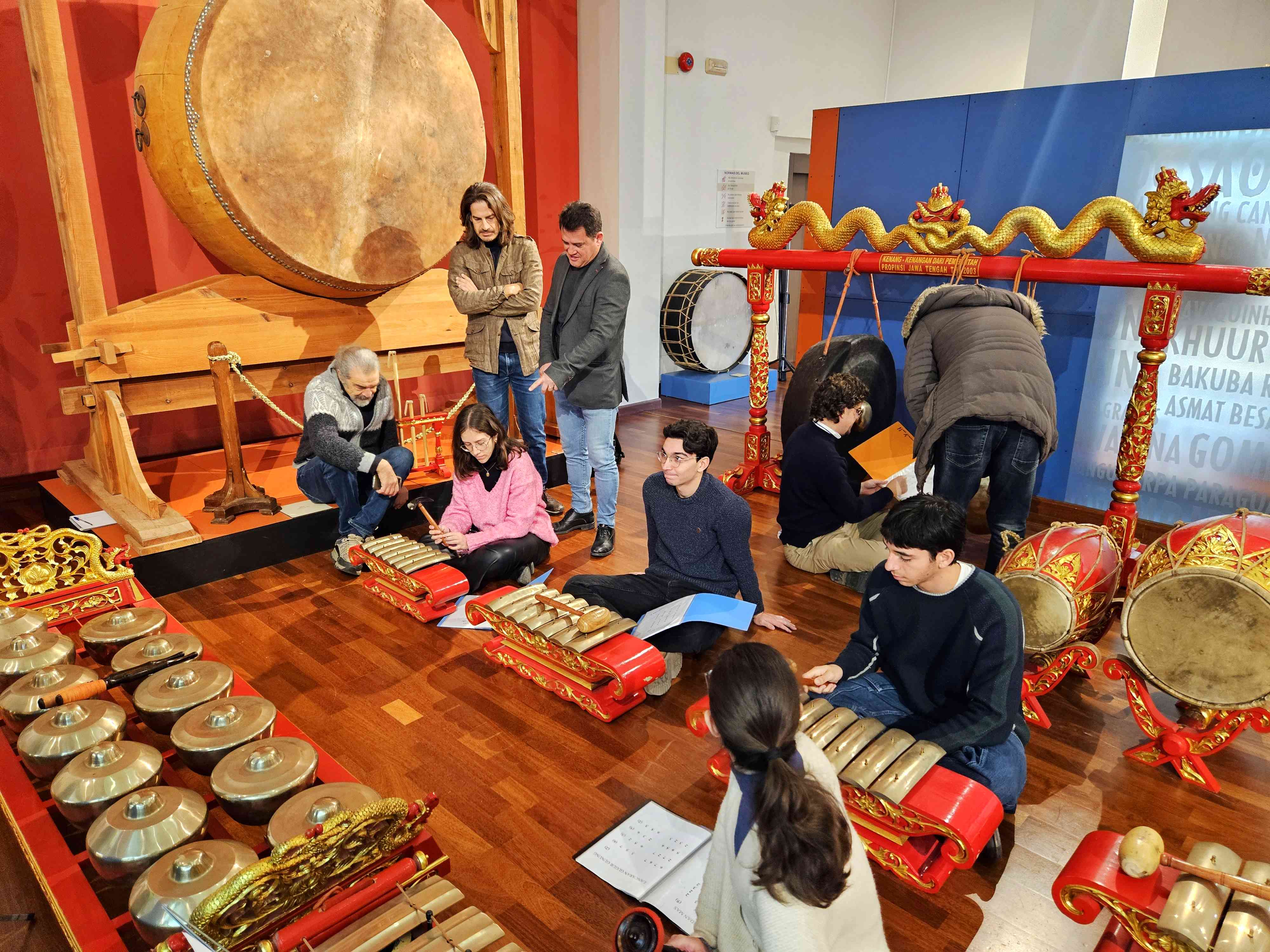
 

04/12/2025. El Conservatorio Profesional de Música ‘Leandro Martínez Romero’ de Caravaca de la Cruz y el Conservatorio Superior de Música ‘Manuel Massotti’ de Murcia han puesto en marcha un proyecto educativo y cultural sin precedentes que permitirá hacer sonar algunos de los instrumentos de la colección Blanco Fadol, expuesta de forma permanente en el Museo de la Música Étnica de Barranda, espacio integrado en la Red Municipal de Museos del Ayuntamiento de Caravaca de la Cruz.

Dentro de esta iniciativa, en marcha desde el pasado mes de junio, se ha celebrado un encuentro en el propio museo, en el que han participado el alumnado que interpretará la orquesta Gamelan, los compositores y profesorado de ambos conservatorios, así como el especialista David González, el creador de la colección, Carlos Blanco Fadol, y el concejal de Educación en el Consistorio caravaqueño, Pepe Fernández Tudela. Durante esta sesión, los asistentes han profundizado en la sonoridad, funcionamiento y tradición de este conjunto instrumental originario de Indonesia, considerado el corazón musical del sudeste asiático y uno de los elementos icónicos del Museo, que alberga instrumentos procedentes de los cinco continentes.
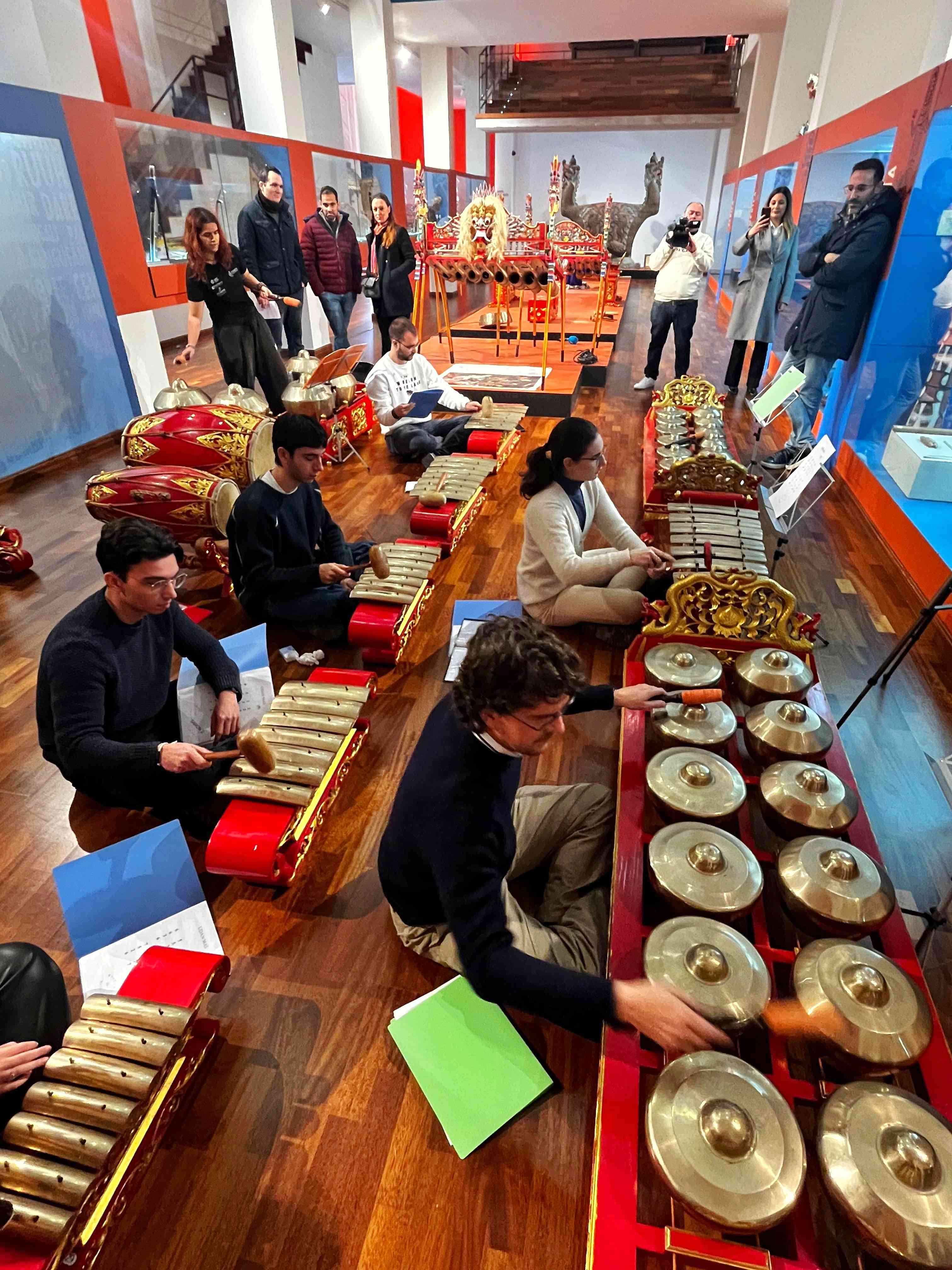
El proyecto contempla visitas de compositores e intérpretes al Museo, fases de creación de las obras, sesiones formativas con especialistas y los ensayos conjuntos previos al estreno previsto para el 16 abril de 2026. Esta propuesta supone un modelo de colaboración institucional que aúna conservación del patrimonio cultural y formación artística, y consolida el valor del Museo de la Música Étnica de Barranda como una herramienta educativa de primer nivel.

El Gamelan como eje artístico y pedagógico

La primera fase del proyecto se centra en la orquesta Gamelan del Museo, un conjunto de metalófonos, tambores, gongs y otros instrumentos tradicionales de enorme riqueza tímbrica. Su utilización en un concierto sinfónico constituye un hecho excepcional, ya que no existe repertorio previo compuesto específicamente para la combinación de Gamelan y orquesta moderna. Para afrontar este reto, el departamento de Composición del Conservatorio Superior de Murcia ha implicado a cinco estudiantes de Grado y a un compositor ya graduado, quienes trabajan en la creación de obras originales que serán estrenadas el próximo 16 de abril de 2026 junto a la Orquesta Sinfónica del Conservatorio de Caravaca.

Un proyecto que suma a la conmemoración del 20 aniversario del Museo

El concejal de Educación, Pepe Fernández Tudela, ha felicitado a todos los promotores y participantes, destacado que esta iniciativa constituye una forma enriquecedora de celebrar el vigésimo aniversario del Museo de la Música Étnica. Asimismo, ha expresado que “el proyecto aportará un valor formativo extraordinario al alumnado y permitirá generar nuevo conocimiento a través de composiciones propias inspiradas en instrumentos poco conocidos o incluso desaparecidos.

Vincular el museo con la educación musical

El director del Conservatorio de Caravaca, Raúl Bartomeu, ha subrayado la importancia de acercar esta colección única al alumnado. “El museo puede contribuir a una formación más completa, no solo desde el punto de vista musical, sino también humanístico, gracias a la riqueza de la gran variedad de instrumentos que reúne la colección Blanco Fadol”, ha señalado.

Raúl Bartomeu ha explicado que “ha tomado forma la idea de diseñar un concierto que uniera este conjunto tradicional de indonesia con una orquesta sinfónica moderna, un proyecto para el que no existía repertorio previo y que impulsó la colaboración con el Conservatorio Superior de Murcia”.