


NOTE! This site uses cookies and similar technologies.

Solicitamos su permiso para obtener datos estadísticos de su navegación en esta web, en cumplimiento del Real Decreto-ley 13/2012. Si continúa navegando consideramos que acepta el uso de cookies. Learn more

I understand
COOKIES POLICY

What is a cookie?


Cookies are files which are downloaded to the user terminal (computer / smartphone / tablet) by accessing certain websites which are stored within its memory. Cookies allow, among other things, to store and retrieve information about the browsing habits of a user or his/her computer, to see what sites are visited, the connection time, to analyse the performance of a site, if there are any technical incidents, etc. Depending on the information contained therein and the way in which the terminal is used, they can be used to recognise the user.

What types of cookies are there?


There are several types of cookies depending on different criteria.

Depending on the title:

· Own cookies. Those belonging to turismocaravaca.com.
· Third-party cookies. They are owned by a third party, other than turismocaravaca.com, that will deal with the information collected.

Depending on the purpose:

·Technical and/or personalisation cookies. They are used to improve service, locate incidents, recognise the user, etc.
· Analysis cookies. They are used to analyse navigation information

What is a cookie for?


We use cookies to offer you personalised services, analyse the performance of the system, recognise you as a user when you access, locate incidents and problems that may arise and solve them in the shortest period of time, as well as analyse and measure the usage and activity of the website.

Is my consent needed to set a cookie?


Consent for the installation of technical cookies or cookies that are strictly necessary for the provision of a service from the information society specifically requested by the user is not required.
As for the rest, the user's consent is required, and it can be obtained in different ways. In the case of turismocaravaca.com, it will be understood that it has been granted if you continue using the website; notwithstanding the fact that you can at any time withdraw it and disable cookies. 

What cookies are currently used by turismocaravaca.com?


TECHNICAL COOKIES: These are OWN cookies, regarding session, identification, configuration and registration, strictly necessary to identify the user and to provide services requested by the user. The information obtained through them is only dealt with by turismocaravaca.com.

ANALYSIS COOKIES: They are dealt with by us or by third parties; they allow to quantify the number of users and so make the measurement and statistical analysis of the use made by users of the service provided. With this aim, navigation in our website is analysed to improve our supply of products or services.

The information collected by analysis cookies is treated by turismocaravaca.com and a third party (Google Analitycs, http://www.google.com/analytics/).

This application has been developed by www.google.es.

This company provides us the analysis service of our website audience and can use this data to improve its own services and to provide services to other companies.
You can find these and other usages on the links provided.

This tool does not collect data from the first or last names of users or the address from where they connect. The information obtained is related to the number of pages visited, language, social network in which our services are published, the city to which the IP address from which users access is assigned, the number of users who visit us, frequency and repetition of visits, time of visit, browser used, operator or type of terminal from which visits are made.

We use this information to improve our website, identify new needs and evaluate the improvements to be made in order to provide a better service to users who visit us.

How can I disable cookies?


Most browsers indicate how to configure your browser not to accept cookies, to notify you whenever you receive a new cookie, as well as to completely disable them. To control what use you wish to be done of your information, you can configure your terminal browser in the way you consider to be the most convenient for you.

In any case, we do note that if the technical and/or operational cookies are disabled, the quality of the website can be diminished or it might be more difficult to identify you. 

We indicate the links below where you can find some more information on the different browsers:

· Chrome, http://support.google.com/chrome/bin/answer.py?hl=es&answer=95647

· Explorer, http://windows.microsoft.com/es-es/windows7/how-to-manage-cookies-in-internet-explorer-9

· Firefox, http://support.mozilla.org/es/kb/habilitar-y-deshabilitar-cookies-que-los-sitios-we

· Safari, http://support.apple.com/kb/ph5042

El alcalde y la consejera de Turismo, Cultura, Juventud y Deportes han mantenido una reunión de trabajo con el musicólogo Carlos Blanco para preparar esta efeméride

José Francisco García ha avanzado que el Ayuntamiento ha desarrollado un proyecto de digitalización, que dorará a este espacio de la Red Municipal de Museos de pantallas interactivas en distintos idiomas y adaptadas a personas con discapacidad auditiva y visual
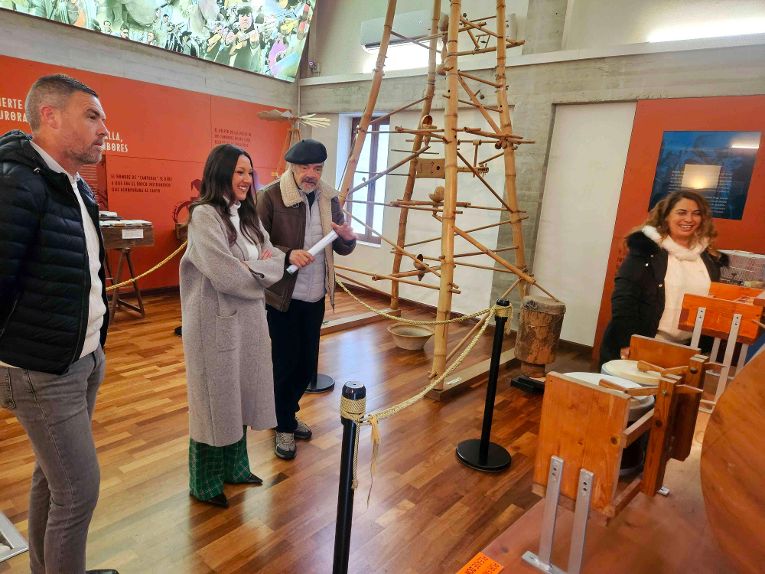
 

En 2025, el Museo de Barranda y sus dos ciclos de conciertos han recibido un total de 6.250 visitantes


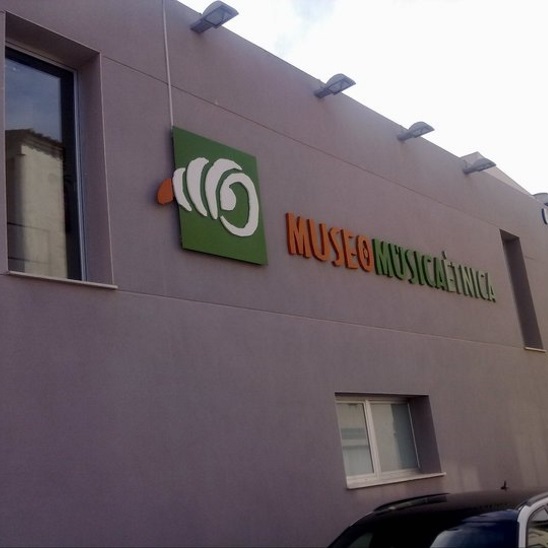
16/12/2025. El Museo de la Música Étnica de Barranda, que alberga la colección de instrumentos del musicólogo Carlos Blanco Fadol, conmemorará el próximo año 2026 su veinte aniversario con una programación especial y con diversas mejoras que vendrán a modernizar este espacio, integrado en la Red Municipal de Museos de Caravaca de la Cruz.

Con motivo de esta efeméride, el alcalde de Caravaca de la Cruz, José Francisco García, y la consejera de Turismo, Cultura, Juventud y Deportes de la Región de Murcia, Carmen Conesa, han mantenido una reunión de trabajo con el musicólogo y con el secretario de la fundación Blanco Fadol, José Antonio Corral, para abordar distintos asuntos relacionados con la celebración del vigésimo aniversario del museo y con su proyección presente y futura.

El alcalde ha señalado que “es un buen momento para reflexionar y poner en valor qué ha significado este museo durante estas dos últimas décadas y también para mirar al presente y al futuro con nuevos proyectos que continúen posicionándolo por su gran valor patrimonial y didáctico”.

José Francisco García ha avanzado que el Ayuntamiento de Caravaca ha elaborado un proyecto de digitalización, presentado a la actual convocatoria de subvenciones de la Dirección General de Calidad Turística de la Región de Murcia, con el que se pretende dotar al museo de pantallas interactivas en distintos idiomas y adaptadas a personas con discapacidad auditiva y visual.

“El objetivo es que cualquier visitante pueda ver, escuchar y comprender la diversidad de los sonidos del mundo, disfrutando de una experiencia accesible, inclusiva y sensorial”, ha explicado el alcalde. Además, ha anunciado que en las próximas semanas estará en funcionamiento un sistema de audioguía, con sonidos y explicaciones de los distintos instrumentos que se exponen en el museo.

Durante el año 2025, el Museo de la Música Étnica de Barranda ha recibido un total de 6.250 visitantes, cifra que incluye la asistencia a los dos ciclos de conciertos organizados por el Ayuntamiento de Caravaca: “La luna de Barranda” y “Los conciertos sentidos”, este último recuperado este año tras más de 15 años sin celebrarse.

Por su parte, la consejera de Cultura ha incidido en que se trata de “un museo singular, dedicado a la música y a los instrumentos de música étnica, que merece un mayor conocimiento y reconocimiento”. Carmen Conesa ha subrayado que “va mucho más allá de la mera exposición de los curiosos instrumentos con que cuenta, procedentes de 145 países de los cuatro puntos cardinales del planeta, ya que muestra también las invenciones musicales del propio Carlos Blanco, más de un centenar, y ofrece visitas guiadas, conciertos y actividades diversas que refuerzan las razones para su visita”.

El Museo de la Música Étnica de Barranda es un espacio dedicado a la investigación, difusión y valoración de la música étnica y tradicional. La colección expuesta en el museo consta de más de un centenar de piezas, agrupadas por temáticas, que forman parte de una exhaustiva recopilación de instrumentos musicales étnicos procedentes de unos 145 países. Se trata de instrumentos y objetos que componen una colección única en el mundo, perteneciente al musicólogo uruguayo Carlos Blanco Fadol, cuya recopilación y exposición resultan vitales para adentrarse en el apasionante mundo de la música de raíz, a la que el museo rinde tributo a través de importantes piezas de gran valor cultural y etnográfico. El museo se encuentra en la pedanía de Barranda, cuna de la música de raíz por sede de la Fiesta de las Cuadrillas, uno de los festivales de música tradicional de mayor tradición y popularidad de España, declarado de Interés Turístico Nacional.